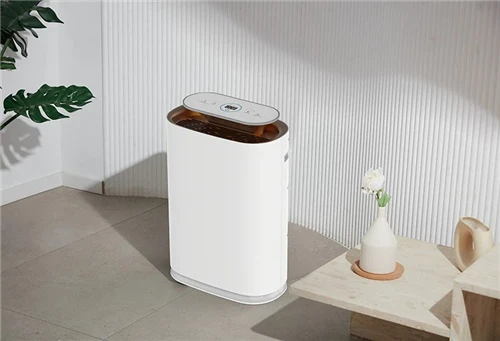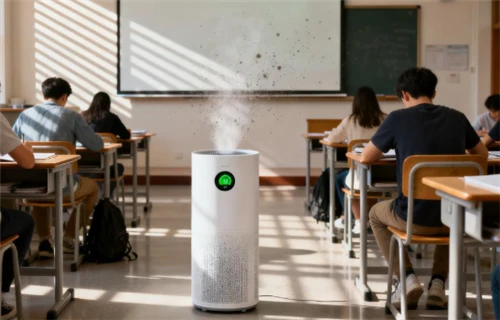
Nairteng's air purifier triboelectric nanopurification helps schools capture fine particles, inactivate bacteria and viruses, achieving zero ozone emission, filter-free operation, and high purification efficiency.
Classrooms, laboratories, and libraries are where students spend most of their day. Indoor air quality in these spaces directly affects respiratory health, concentration, and learning performance. Schools often face a mix of air quality challenges: high occupant density, limited window ventilation, formaldehyde and TVOC emissions from new furniture, outdoor smog, airborne aerosols and pathogens, chalk dust, and stale odors.

Over time, these pollutants can cause dry throats, coughing, nasal congestion, and allergies. Students with weaker immune systems are more vulnerable to respiratory pathogens such as influenza and *Mycoplasma*, which can spread quickly within a class. Formaldehyde and TVOCs can irritate mucous membranes and contribute to dizziness, chest tightness, and drowsiness, making it harder for students to focus. Chalk dust and fine particulate matter can irritate the nose and throat and may trigger allergic rhinitis. Unpleasant odors in enclosed spaces can also distract students and pose long-term health risks to students and staff.
For schools, improving air quality is not simply a matter of buying an air purifier. It requires a safe, long-term, low-maintenance clean-air solution designed for real campus conditions. The Nairteng Air Disinfection Machine is built for this purpose.
Core Technology-- Triboelectric Nanopurification
Developed from research at the Beijing Institute of Nanoenergy and Nanosystems, Chinese Academy of Sciences, the Nairteng Air Disinfection Machine uses a core "triboelectric nanopurification" technology. The innovation earned a first-place award from the Chinese Academy of Sciences for the commercialization of research projects and moves beyond traditional filter-based purification.
The device uses the triboelectric effect-static charge generated through friction-within nanomaterials to create a micro-scale high-voltage electric field. This field captures dust particles as small as 0.3 microns, including ultrafine particles, aerosols, and chalk dust. At the same time, it inactivates the bacteria and viruses it captures. Test data show 99.9% purification efficiency for PM2.5 and a 99.99% elimination rate for bacteria, with strong inactivation of the H1N1 virus. By treating pollutants at the source, the technology helps reduce the risk of respiratory infectious diseases spreading in classroom settings.

Why Schools Need More Than a Standard Air Purifier?
Traditional air purifiers depend on regular filter replacement. Across many school locations, large-scale filter procurement and replacement can create high ongoing costs and a heavy facilities workload. If filters are not changed on time, performance can also decline.
Nairteng's core purification module is washable and reusable. This reduces the need for frequent filter replacement, lowers long-term procurement budgets, and eases the burden on school facilities teams.

Key Advantages of Nairteng Air Purifiers For Schools
Safety first
The unit includes an intelligent child lock. Once activated, other control buttons are temporarily disabled to prevent accidental operation by children. A dedicated sleep mode reduces noise to below 38 decibels, making it suitable for rest areas. The device produces no ozone, emits no UV radiation, and uses no chemical disinfectants, so no harmful substances are released during purification.
Low maintenance costs
The washable, reusable core module helps schools avoid the recurring cost and workload of filter replacement-an important advantage for primary schools, secondary schools, and kindergartens with multiple locations.
Flexible form factors
Nairteng offers vertical air purifiers, ceiling-mounted units, ducted systems, and purification modules for integration into central air conditioning systems. These options can be tailored to different campus spaces, including classrooms, labs, libraries, and nap rooms.
Stable, long-lasting performance
The system is designed to address common campus pollutants by blocking outdoor PM2.5, airborne dust, and chalk dust. It helps reduce the transmission risk of respiratory pathogens such as influenza, norovirus, and hand, foot, and mouth disease, while continuously removing odors, skin dander, and dust mites. When integrated with a school's fresh air or ventilation system, it also helps manage CO₂ levels, particulate matter, and microorganisms. This supports cleaner air even when classrooms are enclosed and helps reduce drowsiness and loss of concentration.

A Practical Path to Healthier Campus Air
Improving air quality on campus requires a comprehensive, long-term, safe, and low-hassle solution. Nairteng's triboelectric nanopurification system captures particles across sizes, inactivates microorganisms, produces no ozone, and uses washable, reusable components that reduce replacement consumables.

The technology addresses the specific challenges schools face-dense classrooms, limited ventilation, constrained maintenance resources, and the need to protect student safety. With a solution built for these conditions, schools can improve indoor air quality consistently and create a healthier breathing environment for students and teachers.