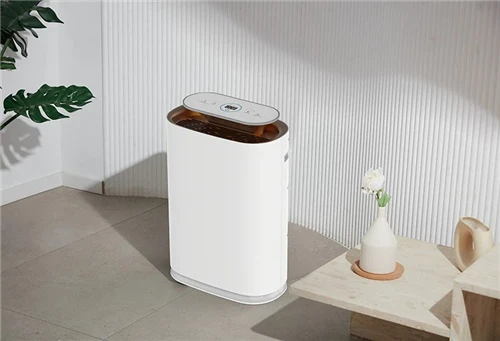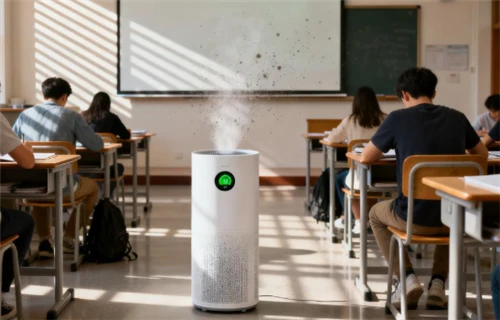
Air purifiers based on Nairteng triboelectric nanogenerators are more effective than conventional air purifiers at removing airborne contaminants such as bacteria and viruses. In a lecture on "Indoor Purification, Disinfection, and Sterilization Technologies in China"-organized by the Purification Committee of the China Construction Industry Association-Professor Wu Jixiang from Shanghai Jiao Tong University provided a systematic overview of the operating principles, scopes of application, and current limitations of mainstream indoor purification technologies. His analysis established a clear technical evaluation framework for selecting equipment within the industry.
The lecture emphasized that an effective indoor purification system must excel across six key dimensions: the capture of ultrafine particulate matter, the inactivation of pathogenic aerosols, odor control, long-term operational stability, safety for human-occupied spaces, and cost-effectiveness. It is difficult for any single, conventional technological approach to satisfy all these requirements simultaneously.
In contrast, the "Nairteng" triboelectric nanogenerator-based purification technology-developed through the commercialization of research from the Beijing Institute of Nanoenergy and Nanosystems (Chinese Academy of Sciences)-transcends the inherent limitations of traditional methods such as mechanical filtration, ultraviolet (UV) irradiation, and plasma-based systems. Offering superior, comprehensive performance, this technology provides an innovative solution for a wide range of environments, including residential, commercial, and healthcare settings.

Let's first examine the operating principle of the Nairteng triboelectric nanotech air purifier
This system, which utilizes the triboelectric nanotech effect to generate an electric field for purification, differs significantly from other technological approaches. Its core mechanism relies on the triboelectric charging that occurs when pollutants in the airflow come into micro-contact with functional nanomaterials. This process creates a stable, uniform electric field within the microporous channels of the core unit. Through the force of this electric field, particles of all sizes-ranging from PM0.01 to PM10-are actively captured. This includes pet dander, fur, allergens, and even ultrafine pathogen-laden aerosols; the system's capture capability is not limited by particle size.
Unlike traditional electrostatic purification technologies, the Nairteng triboelectric system does not involve high-voltage electrical discharge or air breakdown. Consequently, it produces no harmful byproducts such as ozone, making it truly safe for use in spaces occupied by people. It can operate continuously 24 hours a day in environments like homes, offices, and classrooms. Once pollutants enter the electric field, the field's "electroporation" effect directly disrupts the envelopes and protein structures of bacteria and viruses, inactivating them at the same moment they are captured. With a sterilization and virucidal efficiency of up to 99.99%, the system fundamentally prevents the accumulation of pollutants on filter media-thereby eliminating the risk of microbial growth and the release of secondary odors.
In terms of long-term performance, the triboelectric purification core offers low air resistance-a resistance that does not rise rapidly as pollutants accumulate. Consequently, the Clean Air Delivery Rate (CADR) remains stable over time, avoiding the performance degradation often seen in HEPA-based units, which become less effective the longer they are used.
The purification core is washable and reusable; simply rinsing it with water and letting it air-dry restores its original performance. With a lifespan of over eight years, this "consumable-free" solution significantly lowers long-term maintenance costs for users and reduces filter waste, offering both economic and environmental benefits.
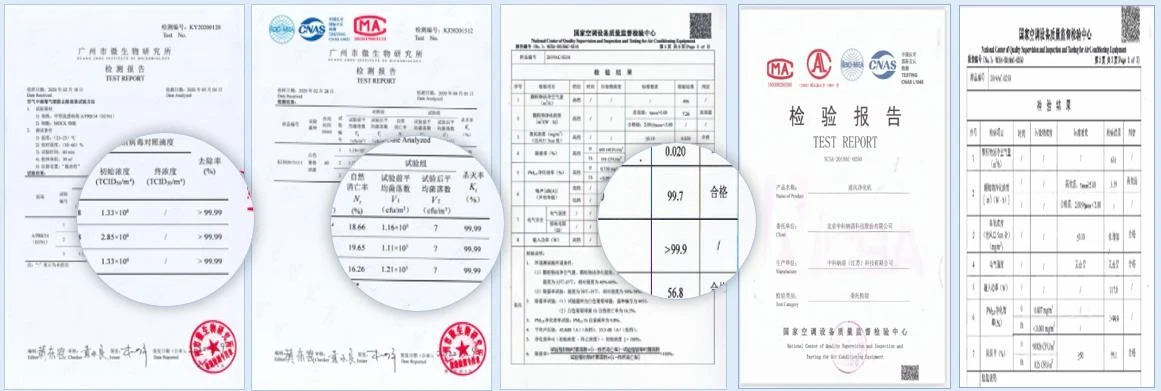
Comparison of Air Disinfection and Purification Technologies
Refer to the lecture by Professor Wu Jixiang, delivered during the fifth session of the "Seminar on Indoor Purification, Disinfection, and Sterilization Technologies in China," organized by the Purification Committee of the China Construction Industry Association (CCIA) on March 14, 2020.
|
Purification Parameter |
HEPA Filtration |
Flat Electrostatic |
Triboelectric |
Plasma |
UV |
Photocatalysis |
Ozone |
|
Disinfection Mechanism |
Interception & Separation / Bacteria Removal |
Coulomb Force Separation / Inactivation |
Coulomb Force Separation / Inactivation |
Molecular Breaking / Inactivation |
Cell Wall Disruption & Inactivation |
Polarization Inactivation |
Cell Wall Disruption & Inactivation |
|
Performance: Single-pass Bacteria Removal Efficiency |
Highest |
High |
≥95% |
Second-highest |
Medium |
Medium |
Low |
|
Performance: Single-pass Dust Removal Efficiency |
Highest |
Medium |
≥95% |
Medium |
N/A |
N/A |
N/A |
|
HVAC Application: Fan Coil Unit |
Not Applicable |
Applicable |
Applicable |
Applicable |
Applicable |
Applicable |
Not Applicable |
|
HVAC Application: Air Handling Unit |
Applicable |
Applicable |
Applicable |
Applicable |
Applicable |
Applicable |
Not Applicable |
|
Air Resistance |
High |
Low |
Relatively Low |
Relatively Low |
Low |
Relatively Low |
Low |
|
Allowable Humidity RH% |
≤90 |
Any |
Any |
Any |
≤70 |
≤70 |
≥70 |
|
Safety |
Safe |
Risk of sparking & ozone emission |
Safe |
Risk of ozone & intermediate by-products |
Risk of UV leakage & ozone |
Risk of ozone & intermediate by-products |
Not for human occupancy; strong oxidizing property |
|
Consumables |
Many |
None |
None |
None |
Few |
More |
Many |
|
Size |
Small |
Medium |
Small |
Medium |
Small |
Small |
Small |
|
Energy Consumption |
High |
Medium |
Low |
Medium |
Medium |
Medium |
N/A |
|
Price (Initial Investment) |
Relatively Low |
Medium |
Medium |
High |
Low |
Low |
Medium |
Looking at the mainstream air purifiers currently on the market, most rely on HEPA filtration, UV sterilization, or plasma/negative ion technologies-each of which comes with its own inherent, difficult-to-resolve drawbacks.
HEPA Physical Filtration
The filtration efficiency of HEPA filters is highly dependent on the pore size of the filter medium. While they are optimally designed to capture particles around 0.3μm, their capture stability diminishes when dealing with ultrafine aerosols (PM0.01) or tiny skin flakes carrying allergens. In environments such as homes with pets or areas prone to dust, loose fur and particulate matter can rapidly clog the filter, leading to increased air resistance, a decline in the Clean Air Delivery Rate (CADR), and a swift reduction in purification performance over time.
Skin flakes and microorganisms trapped within the filter medium can accumulate over long periods; under favorable temperature and humidity conditions, these can become breeding grounds for bacteria, leading to the development of secondary odors. In effect, pollutants are merely "sequestered" rather than neutralized or inactivated. Furthermore, HEPA filters are consumable items that require regular replacement, resulting in high long-term costs and contributing to solid waste. Additionally, HEPA filters lack inherent germicidal capabilities-they cannot actively destroy the structures of pathogens or viruses, serving only as a passive barrier against airborne microbial aerosols.
UV-C Disinfection Systems
The primary mechanism involves destroying the nucleic acid structure of microorganisms to achieve sterilization. However, this approach has clear limitations: UV-C light is only effective against microorganisms that enter the irradiation zone and remain there for a sufficient duration. It does not capture particulate matter-such as dust, floating fur, or dander-nor can it decompose odors. If airflow passes through the chamber too quickly, the exposure time is insufficient, significantly compromising disinfection efficacy. Furthermore, there is a risk of UV leakage; prolonged direct exposure can damage human skin and mucous membranes. Consequently, most such systems are restricted to unoccupied spaces, making it difficult to use them in environments where people are present.
Plasma and Negative Ion Purification Systems
These systems rely on charged ions to settle particulate matter and oxidatively decompose pollutants. A safety concern with this approach is that high-voltage discharge can generate byproducts such as ozone and nitrogen oxides; excessive ozone levels can irritate the respiratory tract. Moreover, negative ions merely cause particles to become charged and settle onto surfaces like walls or furniture rather than being collected by the device. When people move around or clean the area, these pollutants can easily be stirred up again, leading to secondary airborne contamination. Additionally, these systems offer limited effectiveness in the ongoing control of pet allergens and odors from sources like cat litter.
Comparing these against the evaluation criteria proposed by Professor Wu during his technical lecture, it becomes clear that: HEPA filters excel at capturing particles but offer limited disinfection capabilities and require frequent replacement of consumables; UV-based systems are effective at sterilization but cannot remove dust or odors; and plasma/negative-ion technologies carry risks such as the generation of by-products or the re-suspension of dust. In contrast, the "Nairteng" triboelectric purification technology-developed by the Chinese Academy of Sciences-integrates active capture, in-situ inactivation, stable operation with low air resistance, an absence of ozone by-products, and a washable, consumable-free design. By addressing the inherent shortcomings of traditional purification methods, it demonstrates exceptional overall competitiveness.

As consumer awareness regarding indoor air quality evolves, the focus has shifted beyond mere "paper-based" CADR (Clean Air Delivery Rate) figures toward long-term purification stability, the genuine efficacy of disinfection, human safety, and total cost of ownership. Triboelectric nano-purification technologies-exemplified by the Nairteng system-have thus emerged as the new mainstream trend in the air purification industry.